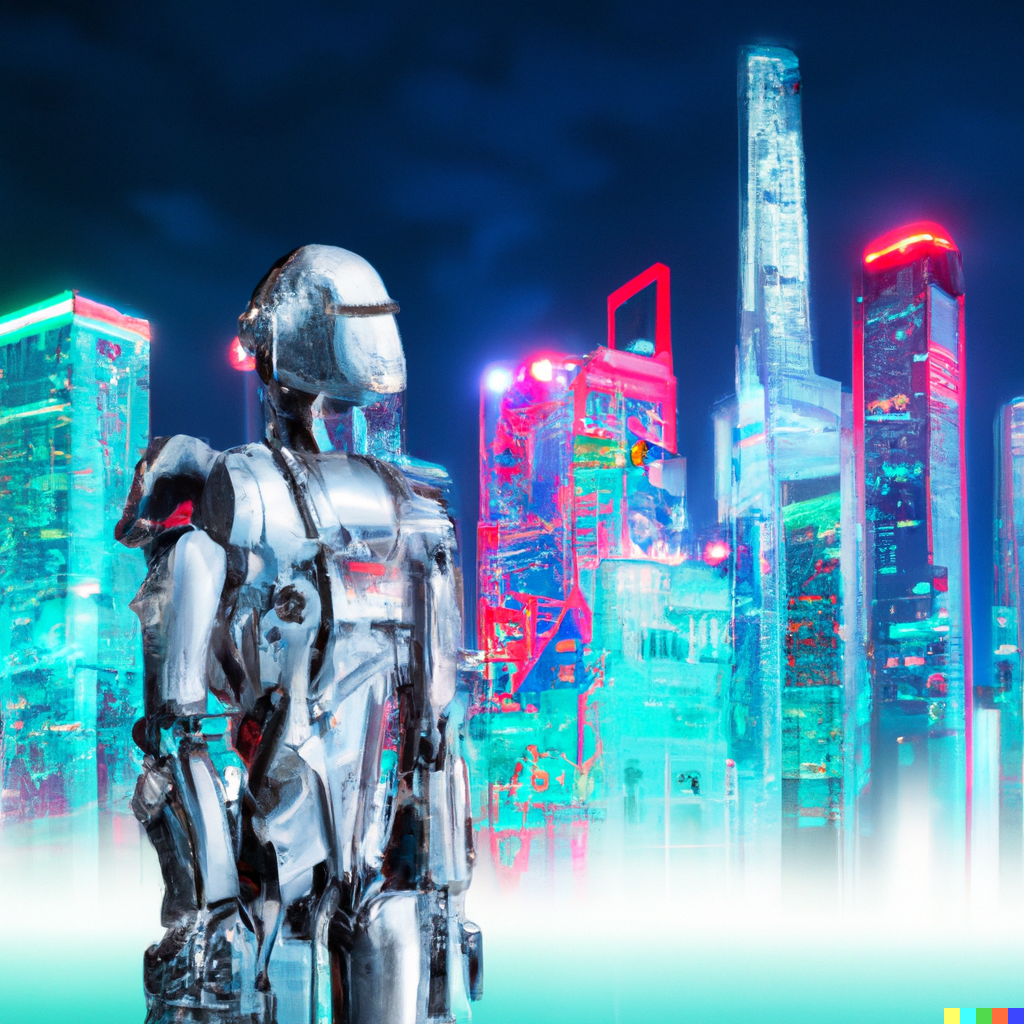
The year was 1977. I stood in the back seat of a Dodge Charger peering through the windshield as the sun finally set enough for the towering screen outside to begin to scroll words on a starry backdrop. I couldn’t read them fast enough because I was only 5 years old.
The classical number “Star Wars”, a musical theme composed and conducted by John Williams and played by the London Symphony Orchestra, warbled through a metal speaker hanging by a bracket rolled up in the passenger window glass next to me. My eyes were wide and my ears tingling with anticipation.
This was my first cinematic experience, and it was unforgettable. In the film, set in a futuristic universe, I was introduced to a variety of space ships, androids, aliens, and humans who seamlessly navigated the universe.
It’s 45 years later. I am sitting in a 2022 Subara Forester. And typing on a phone that has more computing power than the computers that were used in the production of Star Wars: Episode IV – A New Hope. The personal computer industry truly began in 1977, with the home computer becoming the wave of the future. The first big players were the Apple Computer, Inc. (now Apple Inc.), Apple II, the Tandy Radio Shack TRS-80, and the Commodore Business Machines. And yet today, nearly everything on that movie screen regarding robots somehow looks completely possible.
A man named Raymond Kurzweil was just 29 years old while I walked to kindergarten with my Star Wars metal lunchbox clutched in my tiny hand. A futurist and budding computer scientist, Ray was the forfront of invention and innovation, one of the many brilliant men who pioneered and forged new paths for computers to serve the human race. He envisioned a world where humans and machines essentially became one – and machine language and intellectual capacity surpassed that of human beings. This idea, called Singularity, was first coined by John von Neumann in 1958.
Singularity, for Kurzweil, is defined as “a future period during which the pace of technological change will be so rapid, its impact so deep, that human life will be irreversibly transformed.” The idea is that discovery and progress will “explode with unexpected fury.”
And here we are. Elon Musk is making great strides in both space travel and Neurolink, an amazing technology that links human thought (brainwave patterns) directly to machines. Artificial Intelligence (AI) is used by both businesses and the government to design parts, aid on the battlefield, and solve problems in Human Resource departs.
We have moved in the last 20 years as a human species into interdependency on machines. If you don’t believe me, try to take someone’s phone from them. Watch what happens when someone’s phone goes on the fritz while driving somewhere and they no longer have a GPS guidance system. Our tasks, calendars, lists, appointments, banking, work, play, and social networks all exist on a handheld device. But where is this taking us?
We are entering the age of Singularity, and we barely recognize it. AI is no longer science fiction. We have robots in development today that can outmaneuver C3PO and speak just as well. As a species, we are removing our biological barriers with machines becoming our “go to” source to automate our lives in ever-increasing increments. The Metaverse is looming, calling, and beckons us to become digital beings.
People have always had a bit of paranoia about machines taking over the world. Movies fixate on such tropes. However, it isn’t so much the machines, but us. Humans desire power and control, not machines. There are people who understand that machines can give them all the power and control they have longed to have over others. Where will we side in this new battlefield of technology and artificial intelligence? As users of technology, when will we become so dependent on it that living life without it becomes unimaginable?
When does the tool become the crutch? When does the user become the used? Will our species be able to survive the power grab of these emerging technologies that are so transformational that we aren’t ready for them?
There is a balance, and I hope we find it soon.
 Moving Higher
Leave a comment